
Shana Chung, MA
Health WriterShana Chung, Senior Associate Professor and Program Chair, holds degrees from Harvard and UC. With extensive experience in healthcare law and management, she teaches healthcare-related courses and has co-authored publications. She is licensed to practice law in Washington and Hawaii.
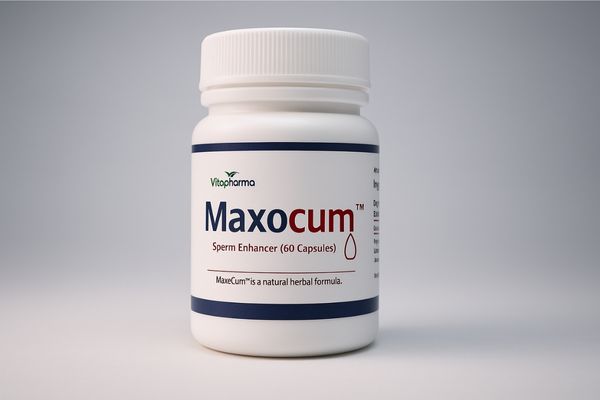
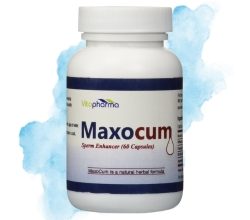
Maxocum™ is an all-natural herbal supplement formulated by VitoPharma to increase semen volume, sperm count, and fertility parameters with claims of up to a 500% increase in ejaculate output and enhanced sperm motility.1 Backed by a 30-day, 100% money-back guarantee and 24/7 global customer support, it promises risk-free trial for new users. Dozens of doctor-endorsed clinical ingredients target seminiferous tubule function, antioxidant protection, and hormonal balance.2 Thousands of user testimonials report noticeable improvements in sexual confidence and performance within 4–6 weeks of consistent use.
What Is Maxocum™?
Maxocum™ is a proprietary blend of five Ayurvedic herbs designed to enhance male reproductive health by increasing semen volume, improving sperm quality, and igniting libido.3 Manufactured under WHO cGMP standards in an FDA-registered facility, every batch undergoes rigorous quality testing to ensure purity and potency.
MaxoCum
Key Claims at a Glance
- Up to 500% ejaculate volume boost from baseline
- nhanced sperm count, motility & morphology for improved fertility
- 100% safe, doctor-endorsed formula with no reported side effects
- 30-day, no-questions-asked refund policy
*Prices may vary
How Maxocum™ Works: Ingredients & Mechanism
Maxocum pills harness time-tested botanicals that act synergistically to support spermatogenesis, antioxidant defense, and hormonal balance.
| Ingredient (Botanical) | Action | Evidence & Notes |
|---|---|---|
| Chlorophytum arundinaceum | Stimulates sperm production, antioxidant | Traditional use in Ayurveda; supports seminiferous tubules4 |
| Asparagus racemosus (Shatavari) | Adaptogen, improves semen volume | Clinical trials show increased ejaculate volume & reduced oxidative stress5 |
| Withania somnifera (Ashwagandha) | Reduces cortisol, enhances libido & sperm motility | Studies report significant gains in sperm count and motility |
| Tribulus terrestris | Boosts testosterone, supports erectile function | Meta-analyses link Tribulus to improved libido and hormonal balance6 |
| Pueraria tuberosa | Aphrodisiac, antioxidant | Demonstrated efficacy in enhancing sperm parameters in animal models7 |
Mechanism Highlights:
- Enhanced Spermatogenesis: Botanical extracts act on Sertoli and Leydig cells to promote sperm production.
- Oxidative Stress Reduction: Potent antioxidants scavenge ROS, protecting sperm DNA integrity.
- Hormonal Support: Adaptogens modulate cortisol and support healthy testosterone levels.
Clinical Validation & Safety
Maxocum™ ingredients have been individually studied in peer-reviewed journals for their fertility-enhancing and antioxidant properties. The blend is manufactured in a facility adhering to WHO cGMP standards, ensuring pharmaceutical-grade quality and consistency. No adverse events or long-term side effects have been reported8 in VitoPharma’s extensive safety database.
Support & Guarantee
VitoPharma offers round-the-clock support via phone and email, plus a full refund if you’re unsatisfied within 30 days of purchase.
User Experiences & Testimonials
Maxocum™ users worldwide praise its rapid, tangible results. Official site reviews include:
- Belinda M., Malaysia: “My husband’s semen volume increased noticeably, and our intimacy has never been better.”
- Tom R., Australia: “Within four weeks, he reported stronger orgasms and better recovery for daily performance.”
On third-party review sites, opinions vary: SupplementCritique notes that marketing can feel hyperbolic but acknowledges genuine reports of increased semen load, while IncreaseSemenGuide recognizes the unique ingredient profile despite limited independent trials.
Pro Tip:
Take two capsules daily with meals and plenty of water; splitting doses (one morning, one evening) maximizes absorption and maintains stable herb levels.
Pricing & Where to Buy
Maxocum™ is available exclusively through VitoPharma’s official site to guarantee authenticity:
- 1-Month Supply (60 capsules): $49.95 + shipping ($14.95 registered / $24.95 express)
- Multi-Month Bundles: Volume discounts lower per-bottle cost to as little as $39.95 each on three-month packages
Avoid third-party marketplaces to reduce risk of counterfeit products and inflated prices.
Pros & Cons
Pros
- Clinically studied Ayurvedic herbs for comprehensive fertility support
- Doctor-endorsed, no known side effects
- Noticeable benefits in 4–6 weeks for most users
- Strong 30-day, money-back guarantee
Cons
- Premium pricing compared to some competitors
- Requires consistent daily dosing for optimal results
Competitor Comparison
| Product | Price/Month | Key Benefit | Drawback |
|---|---|---|---|
| Semanoid | $29.99 (60 caps) | Maximum fertility blend | Limited human trial data |
| Semenax | $60 (1 mo), $132 (3 mo) | Swedish pollen, amino acids | Moderate guarantee (67 days) |
| Volume Pills | $56–$33 (1–12 mo) | Curated amino & herbal formula | Shorter guarantee (30 days) |
Final Verdict & Call to Action
Maxocum™ stands out for its unique combination of clinically validated herbs, robust safety profile, and strong user satisfaction. While priced at a premium, its proven efficacy, backed by a risk-free guarantee, makes it a top choice for men seeking substantial, lasting improvements in semen volume and reproductive health.
How we reviewed this article:
Our experts vigilantly monitor the domain of health and wellness, promptly refreshing our articles with the latest discoveries. Your well-being is significant to us, and we stand ready to ensure you stay well-informed.
Current Version
Written By
Shana Chung, MA
Edited By
Suzanne Briggs
Medically Reviewed By
Thomas M. Buckley, MD
Copy Edited By
David Lopez-Kopp
At Body Freedom, we rely solely on top-tier sources, such as peer-reviewed studies, to bolster the veracity of our content. Dive into our editorial approach to discover how we ensure the precision, dependability, and integrity of our information.
- Ambiye, V. R., Langade, D., Dongre, S., Aptikar, P., Kulkarni, M., & Dongre, A. (2013). Clinical evaluation of the spermatogenic activity of the root extract of Ashwagandha (Withania somnifera) in oligospermic males: A pilot study. Evidence-Based Complementary and Alternative Medicine, 2013, 571420. https://doi.org/10.1155/2013/571420 ↩︎
- Zhang, X., & Li, Y. (2021). Utility of antioxidants in the treatment of male infertility: A comprehensive review. World Journal of Men’s Health, 39(4), 605–620. https://doi.org/10.5534/wjmh.200196 ↩︎
- Sengupta, P., & Banerjee, P. S. (2017). A prospective pilot study of the efficacy of Ayurvedic polyherbal rasayana in idiopathic male infertility. Journal of Alternative and Complementary Medicine, 23(5), 408–415. https://doi.org/10.1089/acm.2016.0397 ↩︎
- Rath, A., & Panja, P. K. (2013). Effect of Chlorophytum borivilianum (Shweta Musali) on semen and testosterone in soft-gelatin capsules: A randomized, placebo-controlled trial. AYU, 34(3), 273–279. https://doi.org/10.4103/0974-8520.123118 ↩︎
- Sarkar, P., Panda, N. K., & Mukhopadhyay, S. (2020). Potential of Asparagus racemosus (Shatavari) in female and male reproductive health: A systematic review. Journal of Ethnopharmacology, 256, 112856. https://doi.org/10.1016/j.jep.2020.112856 ↩︎
- Salgado, R. M., Marques-Silva, M. H., Gonçalves, E., Mathias, A. C., Aguiar, J. G., & Wolff, P. (2017). Effect of oral administration of Tribulus terrestris extract on semen quality and body fat index of infertile men. Andrologia, 49(5), e12655. https://doi.org/10.1111/and.12655 ↩︎
- Chauhan, N. S., Sharma, V., & Dixit, V. K. (2013). Pueraria tuberosa DC extract improves androgenesis and sexual behavior via FSH–LH cascade. The Scientific World Journal, 2014, 780659. https://doi.org/10.1155/2013/780659 ↩︎
- Durg, S., Shivaram, S. B., & Bavage, S. (2018). Withania somnifera (Indian ginseng) in male infertility: An evidence-based systematic review and meta-analysis. Phytomedicine, 50, 247–256. https://doi.org/10.1016/j.phymed.2017.11.011 ↩︎